Should I Quit Before I Get Fired?
If you're reading this, you probably already know something is coming. Here's what to actually do, covering severance, benefits, references, and timing.

If you’re reading this, something’s already happened.
A performance review that went sideways. A formal improvement plan sitting in your inbox. A manager who’s started talking to you differently. A restructure where your name quietly wasn’t on the new chart. Something told you clearly enough that you started Googling this, that your time here might be limited.
So: do you get ahead of it, or wait to see how it plays out?
The honest answer depends almost entirely on your specific money and contract situation. Let’s work through it properly.
The Money Difference Between Quitting And Being Let Go
This is where most people get it wrong, because the urge to leave “on your own terms” can cost more than it feels like it should.
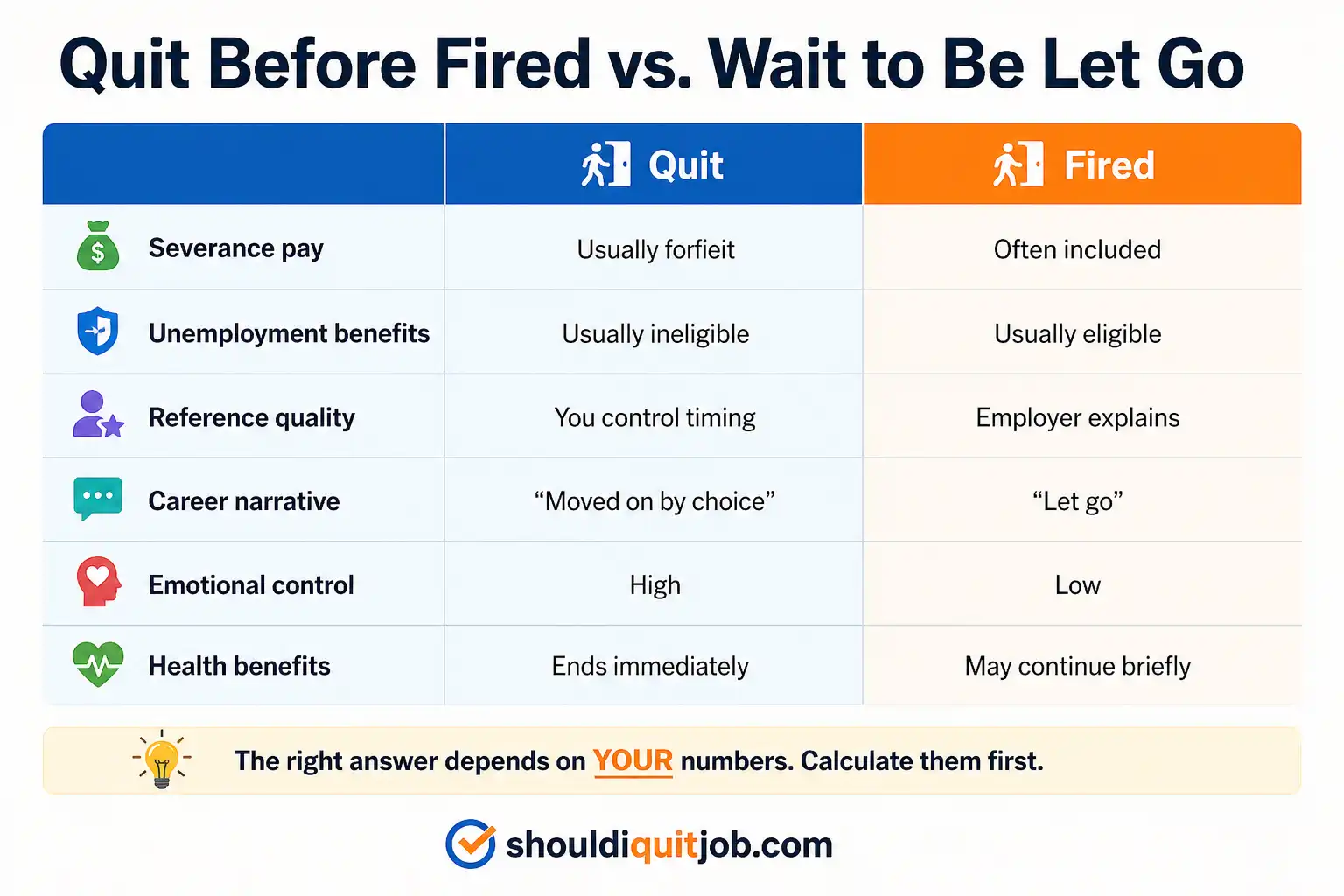
- Severance. Quit, and you generally walk away with nothing extra. Get let go, and you may be owed a payout, sometimes a legally required minimum, often more on top from your employer. Quit first and that money is usually gone for good.
- Money while you search. Many places only let you claim unemployment support if you lost the job through no fault of your own. Resign, and you can end up waiting weeks before you’re eligible, or shut out of it entirely. That’s a real gap to plan around.
- Notice pay. Get dismissed, and you’re often paid for your notice period whether you work it or not. Quit, and you only get what you actually work, nothing extra.
- Salary while the process runs. If you’re on a formal improvement plan, your pay and benefits usually continue while it plays out. Quit halfway through, and you end that early, along with the paycheck.
Financially, riding it out until you’re let go is often the stronger move than people assume, especially anywhere a real payout is on the table.
The Career Side Of It
Beyond the money, there’s a real career angle to this decision too.
- References. This is usually what’s actually driving the urge to leave first, the fear that a firing means a ruined reference forever. In practice, most companies will only confirm your dates and title when someone calls to check, regardless of how you left. Whether your manager personally speaks well of you is a separate question, and the answer to that is often the same either way.
- How the story gets told. Quit, and you get to frame it your way - a deliberate move, your choice, your timing. Get dismissed, and the framing is trickier, though “the role was cut” lands very differently than “I was let go for performance,” and is often the more accurate version anyway.
- Background checks. These usually confirm the basic facts - when you worked there, what your title was, sometimes whether you’re eligible to be rehired. They rarely dig into the details of why you left. A performance-related exit and a serious-misconduct exit are treated very differently, and most situations are the former.
When Getting Ahead Of It Makes Sense
There are real situations where jumping first is the right call.
- The end is clearly coming and there’s no payout on the table. If your employer doesn’t offer severance and you can see where this is heading, weeks of limbo may cost you more in wellbeing than you’d gain by waiting it out.
- You already have something else lined up. If you’ve been quietly searching and you’ve got a real offer in hand, this gets simple. Take it, hand in your notice, and leave things on good terms. No need to sit through a process that’s already decided.
- Staying is costing you your reputation. If what’s happening is visible enough that it’s shaping how colleagues, clients, or your industry see you, leaving cleanly before the formal process ends might protect more than it costs.
- There isn’t much of a payout to lose. If you’ve only been there a short while and there’s no enhanced package coming, the financial case for waiting gets thin fast. A few weeks’ pay might not be worth months of stress.
When Staying Is The Smarter Move
- The payout would actually be significant. Several years in, or a generous package on offer, and the math usually favors waiting. A few uncomfortable months in exchange for months of salary is often worth it.
- The financial support is worth having. Depending on where you live, being let go rather than resigning can unlock real money while you search. Don’t give that up without working out what it’s actually worth.
- There’s a real chance this turns around. Improvement plans don’t always end badly. Some people come out the other side with clearer expectations and a better relationship with their manager. It’s not common, but it happens. If there’s a genuine path to keeping the job and you want it, take the process seriously.
- A quieter exit might be negotiable. Sometimes, if you can see what’s coming, a direct conversation with HR about a mutual, redundancy-style exit is possible, one that pays and reads differently than a straight resignation or firing. It’s more available than most people think to ask for. A short conversation with an employment lawyer can tell you what’s realistic before you have that talk.
Do These Regardless
Whatever you decide, do these right away.
- Write it down as it happens. Emails, meeting notes, what was said and when. A factual record protects you if you need it down the line.
- Get an hour with an employment lawyer. Many offer a free first call. It’ll tell you what you’re actually entitled to and whether anything about your specific situation changes the standard advice.
- Start looking now, quietly. From inside the role, without announcing it. Update your CV, reconnect with people, take the exploratory calls. Even if you end up staying through a managed exit, having options moving means you’ll be faster once it’s over.
- Update your LinkedIn while your current title still applies. Do it now, so it reads as forward motion later, not a scramble.
This was never really about pride. It’s about the money, the next role, and protecting what you’ve built.
Know your numbers. Know your rights. Then decide based on what actually serves you, not on how raw the situation feels right now. If you want real numbers behind that decision, the free analysis tool walks through your financial runway in a couple of minutes.
Ready for your answer?
Get a data-backed verdict in 2 minutes
13 questions. Personalised Leap / Wait / Stay verdict. Financial runway analysis. Basic report free · Full analysis available · No login required.
Analyse My SituationThis content is for informational purposes only and does not constitute professional financial, career, or psychological advice. If you're experiencing symptoms of depression, anxiety, or burnout, please speak with a qualified health professional.