Should I Quit My Job and Travel?
The Instagram version: quit, pack a bag, find yourself. The real version: what it actually costs, what it does to your career, and how to plan it well.

The idea grabs you in a very specific way.
Quit. Book a flight. Spend six months somewhere that isn’t an office. Come back with a tan, some perspective, and a clearer idea of what actually matters.
This isn’t an argument against doing that. For plenty of people, at the right time, done with the right preparation, a travel sabbatical is one of the best decisions they’ll ever make. But the gap between the fantasy version and the version that actually works out is mostly financial planning, and most people skip that part.
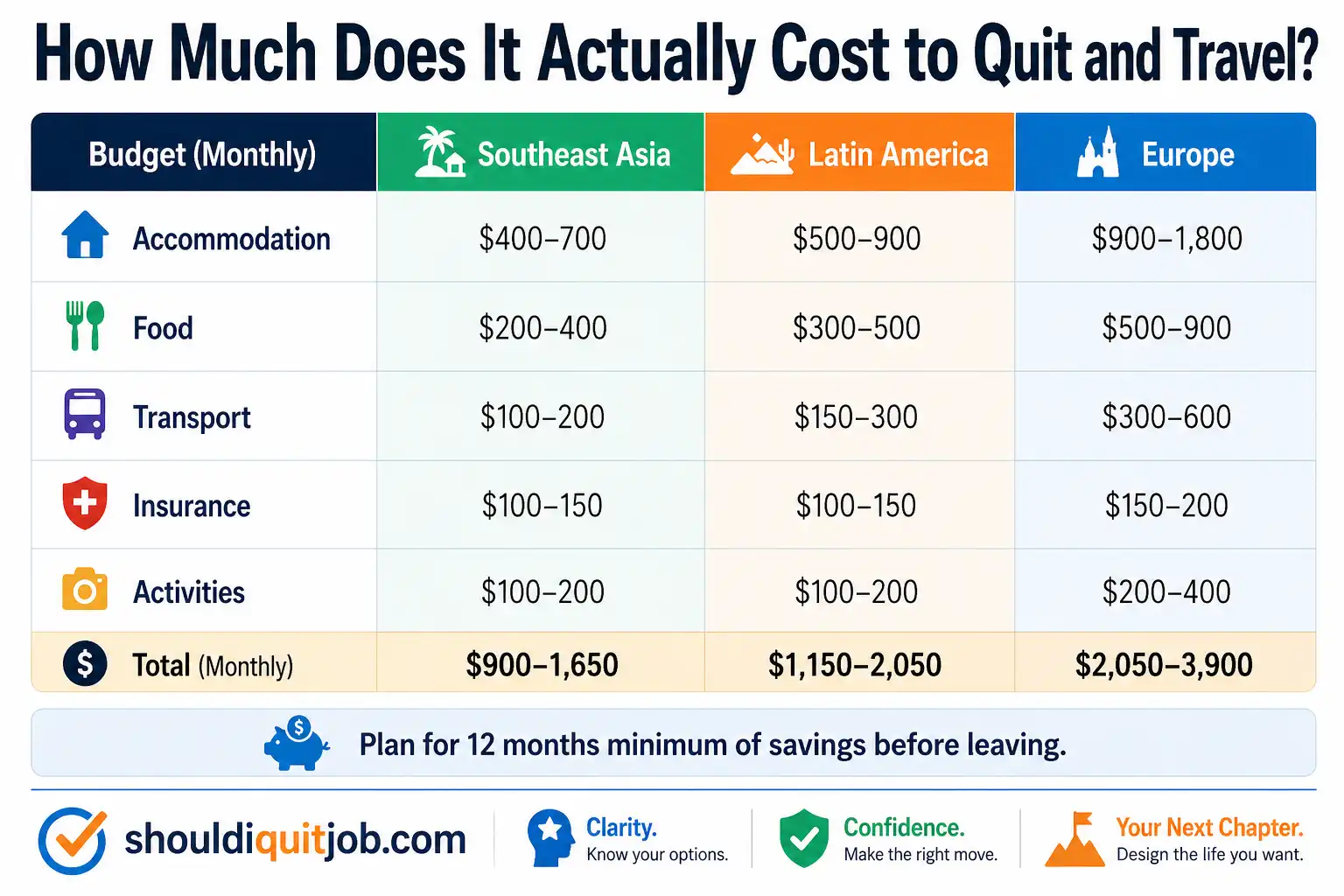
What Long-Term Travel Actually Costs
Most people plan a trip around accommodation. They find a cheap rental in Chiang Mai or Lisbon, decide it’s affordable, and treat that as the whole budget.
It isn’t. Food, local transport, activities, and the subscriptions that don’t pause just because you’re abroad all add up fast.
In Southeast Asia, the full picture usually runs £900 to £1,600 a month for most Western travellers, not the £500 people plan around.
Europe costs considerably more. Budget rooms exist, but moving between countries adds up, and £2,000 to £3,500 a month is realistic if you’re travelling rather than parked in one cheap city.
Latin America sits in between: roughly £1,200 to £2,200 a month for someone travelling comfortably rather than backpacking on the tightest budget possible.
These numbers assume you’re actually moving around. Stay in one place for a month and costs drop. Change cities every few days and they climb.
The Costs Everyone Forgets
Health insurance. Your domestic cover usually doesn’t follow you abroad. A solid international policy for a healthy adult runs £75 to £200 a month, and skipping it is a real gamble. One hospital visit without cover can undo a year of careful saving.
Travel insurance. A separate thing from health cover in most policies - lost bags, cancelled trips, emergency evacuation. Budget £30 to £60 a month.
Flights between stops. Not just the ticket that gets you out. The moves in between. Depending on how much ground you’re covering, that averages £150 to £400 a month across a longer trip.
Storage back home. If you’re keeping a flat or storing your things, that cost keeps running while you’re away. Even a small unit adds £50 to £150 a month.
The landing period. When you get back, there’s usually a stretch before income starts again. Build in a month or two of runway after the trip ends, not just during it.
Will It Actually Hurt Your Career?
The fear is that a gap on your CV quietly ruins your employability. Mostly, that’s overstated, but the real picture is worth knowing.
A gap under six months barely registers in most fields. Hiring managers see it, understand it, and move on without needing much of an explanation.
Six to twelve months usually just needs a clean story. “I took a deliberate sabbatical” is a complete answer on its own. What people are actually checking for is whether it looks intentional or like something you’re avoiding talking about.
Past twelve months, you’ll get more questions, especially in certain industries or at senior levels. Still very manageable - you just need to show what you did, what you learned, and that you’re current in your field now.
What actually matters most isn’t the length of the gap. It’s whether you can talk about it clearly and confidently. A relaxed, forward-looking chat about a full year off beats a nervous, apologetic one about three months, every time.
Telling the Story Well
“I took a break to travel” is honest but thin on its own. Knowing how to frame it in an interview makes a real difference.
Try something closer to: “After several years in [field], I chose to take a deliberate sabbatical before my next step. I spent that time travelling through [places] and figuring out what I actually wanted from the next chapter. Now I’m looking for [specific role] because [specific reason].”
That’s a story with a shape to it. It shows intention and ends looking forward, not backward.
If you did anything useful along the way - freelance work, a course, volunteering, picking up a language - mention it briefly. Not to pad the gap, but because it’s genuinely relevant.
The Middle Path: Work While You Travel
For a lot of people, the realistic option isn’t “quit and travel.” It’s “keep working and travel,” by finding a role that’s genuinely remote-friendly.
Far more employers offer real flexibility now than a few years back. A remote-first role with no location requirement gets you most of what travel is actually about, once you strip away the highlight-reel version.
This won’t work for every field. But if yours allows it and you haven’t checked, it’s worth asking before you assume quitting is the only route in.
Building a Realistic Budget
Here’s a rough number for a six-month trip through Southeast Asia, one of the more affordable regions, planned properly.
Living costs: about £1,200 a month. Health insurance: £120. Travel insurance: £40. Flights and local transport: £200. Subscriptions and odds and ends: £60.
That’s roughly £1,620 a month, or £9,720 across six months. Add a month’s buffer and two months of landing runway, and you’re at approximately £14,600 total.
Europe runs closer to £20,000–£30,000 for the same shape of trip. Latin America lands around £13,000–£20,000.
Most people who cut a trip short or came home stressed had underestimated their number by 40 to 60 percent, not planned badly on purpose.
Getting Ready to Go
Twelve weeks out: work out the full budget, including landing runway, and confirm the savings are there or set a target date.
Eight weeks out: sort insurance, check entry requirements and vaccinations, and give notice with enough runway to leave on good terms.
Four weeks out: arrange storage or a sublet, set up a way to manage money abroad, and let your bank know you’re leaving.
Two weeks out: tie up loose ends at work, have the reference conversations, and update your LinkedIn.
One week out: lock in the first month’s accommodation and have a loose plan for it, even if everything after stays open.
You don’t need the whole trip mapped out. You need the first month planned and the money in place. Everything else sorts itself out once you’re moving. If you want to check whether your finances genuinely support it, run the numbers here before you hand in your notice.
Ready for your answer?
Get a data-backed verdict in 2 minutes
13 questions. Personalised Leap / Wait / Stay verdict. Financial runway analysis. Basic report free · Full analysis available · No login required.
Analyse My SituationThis content is for informational purposes only and does not constitute professional financial, career, or psychological advice. If you're experiencing symptoms of depression, anxiety, or burnout, please speak with a qualified health professional.