Worst Case Scenario: What If You Quit and Fail?
Most people overestimate how bad failure looks and underestimate their ability to recover. Here's an honest stress-test of the fear.

Let’s just say the fear out loud.
“What if I quit, and six months from now I’m broke, unemployed, and worse off than if I’d just stayed?”
That’s a real fear. It deserves to be taken seriously, and taking it seriously means actually walking through it instead of pushing it away. What does the worst case really look like? How likely is it? And if it happened, what would you actually do about it?
Most people never do this. They let the fear stay a vague cloud instead of a specific shape. Once you make it specific, it almost always gets smaller. If you want your own situation turned into something concrete rather than a mood, the two-minute check is a fast way to do that.
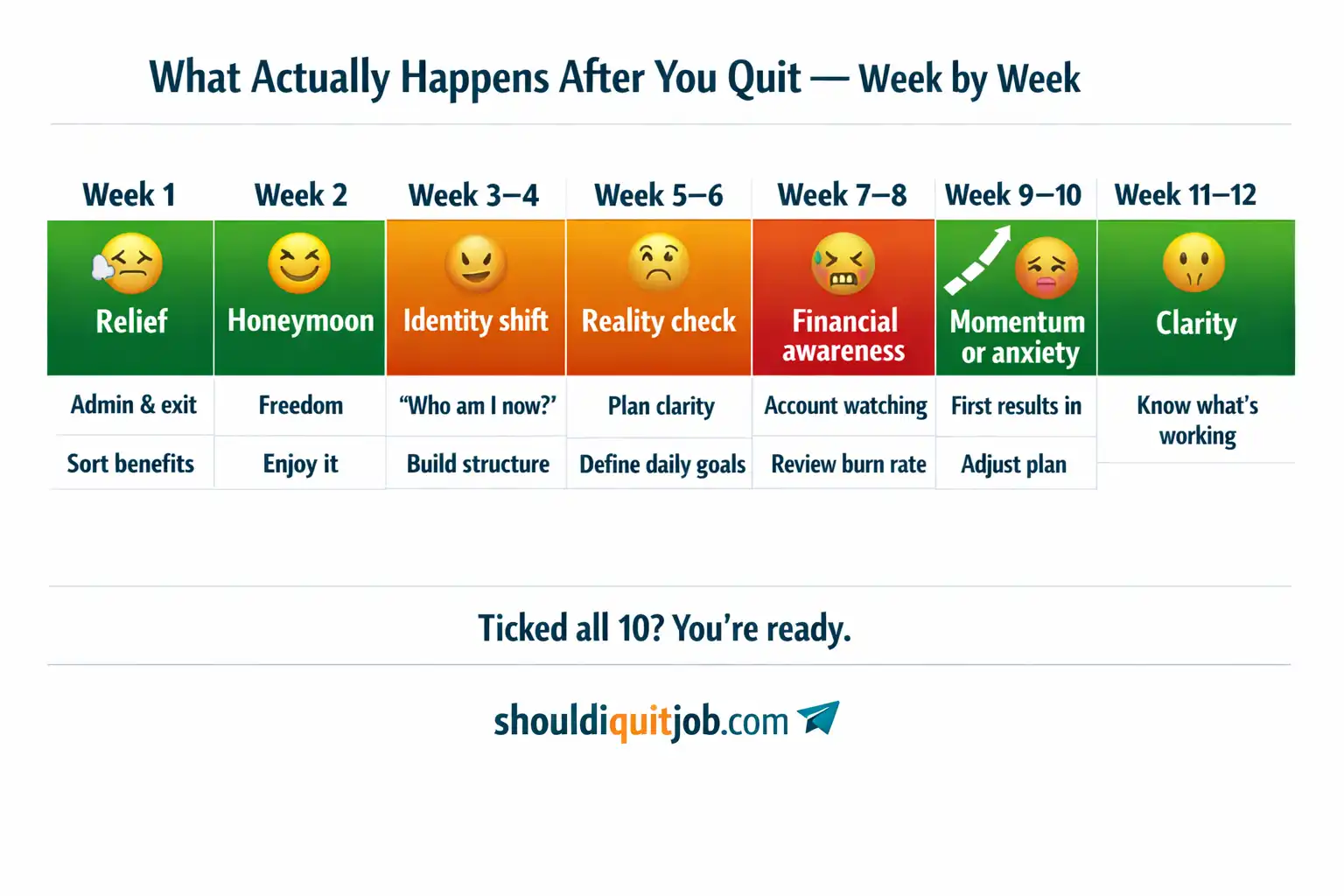
Worst Case 1: The Search Drags On
You leave expecting to land something in three months. It takes nine instead.
What actually happens. You burn through more of your runway than you planned for. Money gets tighter. You start looking at roles you wouldn’t have considered on day one.
How likely this is. More common than people plan for. A lot of searches run past the three-month mark people budget for in their heads. This isn’t catastrophe, it’s just a longer version of the plan you already had.
How you get through it. Pick up interim or contract work while the real search keeps going. Freelance in your field if you can. Narrow what you’re applying for so more of it lands. Get a second pair of eyes on your CV.
The real lever here is income, even partial income, so you’re not just watching savings drain with nothing coming in.
Worst Case 2: The Thing You Started Doesn’t Work
You quit to build something of your own. Six months in, it’s barely making money. A year in, it still hasn’t found its footing.
What that looks like. You’re poorer than when you started. There’s a gap on your CV you’ll have to explain. You spent a year on something that didn’t land the way you hoped.
How likely this is. Genuinely common. Most new ventures don’t make it past the early years. That’s just the base rate, not a verdict on you. A business not working out and you failing are two different things.
How you find your footing again. Most people go back to employment, often at a similar level or better than where they left. Having run something yourself, even unsuccessfully, tends to carry real weight with employers. You’ve also learned things about money, customers, and risk that people who’ve only ever been employed haven’t.
Plenty of people who tried this and came back say it was still one of the best things they ever did professionally, money aside.
Worst Case 3: Your Savings Run Dry Early
An unexpected bill. A search that runs longer than planned. Monthly costs that turned out higher than you estimated. Your buffer hits empty before the next paycheck shows up.
What actually happens. Financial stress. Maybe leaning on a credit card, maybe asking family, maybe making a decision out of panic instead of choice.
How likely this is. Lower if you built a real cushion into your number, especially if you padded it. Higher if you left on a tight, hopeful estimate.
How you get through it. Temp or contract work as a bridge. A separate emergency fund if you set one aside. Whatever support you’re entitled to where you live, if that applies to your situation.
This is exactly why building a real buffer into your number matters so much. It’s not pessimism, it’s the thing that keeps this scenario from happening at all.
Worst Case 4: You Actually Miss The Old Job
You leave. A few months pass. The specific things you hated have faded, and what’s left is missing the structure, the people, the rhythm you used to complain about.
What that feels like. Uncomfortable, honestly. You might feel a little foolish. The change you were sure would help hasn’t delivered yet.
How often this happens. More than people admit. A stretch of “maybe I made a mistake” in the first few months after leaving is common enough to be normal, not a sign you got it wrong.
What usually happens next. It tends to pass. The reasons you left are still true, you’re just adjusting to something unfamiliar. Give it another couple of months before deciding anything based on this feeling.
Also worth knowing: plenty of employers rehire people who left on good terms. If it ever came to that, the door isn’t necessarily shut.
Worst Case 5: Leaving Doesn’t Fix How You Feel
You left partly, or mostly, for your mental health. And the relief you expected either never shows up, or shows up briefly and fades.
What that feels like. Rough, because you did the hard thing and it didn’t pay off the way you hoped it would.
When this tends to happen. More likely when what you were dealing with went deeper than just the job. Rest and distance from a bad situation help a lot, but they don’t replace real support if something bigger is going on.
Where you go from here. If you already have a therapist or doctor in your corner, this becomes something to bring to them, not a crisis on its own. The question shifts from “how do I leave” to “what else does this need.”
The lesson isn’t don’t quit for your mental health. It’s don’t expect quitting alone to do all the work.
Try The Pre-Mortem
One useful exercise before any big decision: imagine it’s a year from now and this went badly. Write down, specifically, what went wrong.
Then write the way back. Who would you call? What would you actually do? What’s already available to you that you’re forgetting about right now?
Almost everyone who does this finds their own recovery path is sturdier than the fear suggested. You’ve got skills and people and options to lean on. Knowing the worst case is survivable changes how heavy it feels to think about.
One Last Thing About Failure
People rarely look back and regret leaving. What they regret is leaving before they were ready, or staying long after they knew they should’ve gone.
The fear of getting it wrong is real. So is the cost of doing nothing.
The goal was never to make the risk disappear. It’s to make it knowable, survivable, and worth taking for what’s waiting on the other side.
Ready for your answer?
Get a data-backed verdict in 2 minutes
13 questions. Personalised Leap / Wait / Stay verdict. Financial runway analysis. Basic report free · Full analysis available · No login required.
Analyse My SituationThis content is for informational purposes only and does not constitute professional financial, career, or psychological advice. If you're experiencing symptoms of depression, anxiety, or burnout, please speak with a qualified health professional.